There is no other name but Jesus whereby we must be saved. Welcome to my blog: In Him Only. I hope you will be encouraged by what you read.

Friday, October 18, 2013

Living Like We Say He Is

Several years ago I wrote and published my first book "We Believe: Forty Meditations on the Nicene Creed." I have been very slow in revising it to reflect the current Nicene Creed statement of faith. I've been slow because I've been lazy. I could have offered other excuses, but that's what they'd be. Excuses.  Life has taken me along different routes, and I just haven't taken the requisite time to update my first book.  But here is what will one day become part of the revised book.
---------


[Jesus] said to them, “But who do you say that I am?”  Simon Peter answered, “You are the Christ, the son of the living God” (Matthew 16:15-16).

Nicene Creed Statement: I believe in one God, the Father Almighty, creator of heaven and earth . . ..”

For the seven years I recited the Nicene Creed as a Catholic (I came into the Catholic Church in 2005), I liked saying “We believe.” As a Jewish Christian, I understand the value of the communal proclamation of faith. For thousands of years my people have made similar proclamation each Sabbath when they recite the cornerstone text of our faith: Sh’ma Yisrael, Adonai Elohenu, Adonai echod.  And for millennia, whether persecuted and ostracized to shtetls, or welcomed into towns or cities, Jews have anchored themselves to one another as much for protection as for self-identity.
Christianity, like its Jewish root, is a communal faith. The Lord Jesus said it first: “I will build my Church.” The Greek word used here – ekklessia – denotes those who are called out of the world and into God’s special community. Jesus did not establish a maverick faith wherein everyone does what is right in his or her own eyes. Anyone with a cursory knowledge of Israel’s history during the Period of the Judges understands how maverick faith leads to disastrous outcomes.

But long before the Church revised the English translation of the Creed in 2012 to better reflect its original “I believe,” I knew the communal ‘We’ in the Creed had potential to rob the community of the personal faith of ‘I’. Without individuals, there would be no community, and without individual faith, the community becomes little more than a religious shell.

The Lord Jesus went out of his way to teach the crowds about the one lost sheep, the one lost coin, the one lost son. He left the throng to find the one demoniac, the one leper, the one lame. He singled out Zaccheus in the sycamore tree, the woman at the well, the tax collector at the table. “My sheep hear My voice”, Jesus said, “and I call them by name.” Yumiko, Ethan, Dakshi, Oksana, Jose, Deloris, Michael . . . .  God calls each of us by name to become part of the community of “those who are called out.”

Perhaps one of the clearest examples of the importance of individual faith can be found in the sixth chapter of 2 Maccabees. By the time of its writing, the Jewish people had been living under Greek domination for more than three centuries. Many had already thrown away the ancient faith passed down from Moses for Greek philosophy, culture and lifestyle. Then, a little more than 160 years before Mary and Joseph laid their Baby in the manger, a Greek politician by the name of Antiochus determined to force the remaining Jews in his realm, under pain of death, to abandon their religion and practices. To expedite their apostasy, he profaned the Jewish Temple, “so that the altar was covered with abominable offerings prohibited by the laws” (2 Maccabees 6:5). He prohibited their celebrations of the Sabbath and their feasts. He made it a crime worthy of torture to even admit to being Jewish.

Enter Eleazar, the elderly Jewish scribe. When brought before the court and forced to eat unclean meat, Eleazar made unambiguous his choice to serve God rather than man. He refused to join the common culture of the day, preferring death than defilement.
But that’s not the end of the story of his personal faith.

“Those in charge of that unlawful sacrifice took the man aside, because of their long acquaintance with him, and privately urged him to bring his own provisions that he could legitimately eat, and only to pretend to eat the sacrificial meat prescribed by the king. Thus he would escape death, and be treated kindly because of his old friendship with them.”

Eleazar, however, would have none of that charade. He answered, “At our age it would be unbecoming to make such a pretense; many of the young would think the ninety-year-old Eleazar had gone over to an alien religion. If I dissemble to gain a brief moment of life, they would be led astray by me, while I would bring defilement and dishonor on my old age.”

He then added, “Even if, for the time being, I avoid human punishment, I shall never, whether alive or dead, escape the hand of the Almighty. Therefore, by bravely giving up life now, I will prove myself worthy of my old age, and I will leave to the young a noble example of how to die willingly and nobly for the revered and holy laws.”

When we recite with those around us the words of the Nicene Creed, “I believe” we proclaim with Eleazar and with all the faithful martyrs who chose God over the culture: We will serve God and no one else. When we recite the creed together, we unambiguously answer the Lord’s question, “Who do you say that I am?”

We forever will say – and will forever live what we say: “You are the Christ, the Son of the living God."

Saturday, October 5, 2013

Growing Old With God

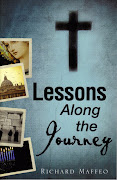
(Excerpted from my second book, Lessons Along the Journey)
---------------


I hadn’t slept well the night before, and weariness settled over me like a heavy rug. Nancy and I returned home from Mass, ate lunch, and were unwinding on the couch where she continued our conversation about her passion for art. But I couldn't keep my mind from drifting. As it did, my eyes focused on her face.
         

I’d noticed her changing features before, but somehow this time I saw her anew. Creases now feather her cheeks and forehead where her skin was once smooth and supple. Gone is her naturally dark auburn hair. She colors it blonde to mask the gray.
         

When I asked Nancy to marry me nearly four decades ago, I thought I knew her. I thought I loved her. Now, half-listening to her describe the colors she planned to use in her next project, I realized how little I really knew or loved her in 1975.
         

We’ve weathered many storms during our years together. Some of them were tsunamis. I don’t even like to dredge them up in my memory. Our son suffered through divorce. Nancy’s beloved stepfather died. Two years later, I lost mine. Financial crises and long periods of unemployment rocked our marriage from time to time. Friends turned their backs on us because of our commitment to Christ. And then there were a dozen military-related moves from one end of the country to the other, which forced us to leave family, friends, and familiar places.
         

Sometimes I wonder how we survived it all. God’s grace? Unquestionably. Intervening from the shadows, often without revealing His hand, our Father brought peace when turmoil overwhelmed us, and freedom when fear bound us. He quieted us when, in frustration, we lashed out at each other instead of going to our knees before our God.
         

God’s grace, certainly. But something else has proven vital to our relationship: our communication with each other.
         

I suppose better than eighty percent of our discussions over the years have been casual. You know the kind: what’s for dinner, what happened at work, the kids have colds . . . . But because of that casual eighty percent, she and I can also meet in intimate, deeply personal conversations. We are able to talk about our hopes, joys, fears and dreams because we have spent so much of our time learning about each other. That’s why I know her – and love her – so much more today than I did when we married.
         

Which brings me to the real point.
         

Thirty-nine years ago, I thought I knew Jesus. I thought I loved him. But, oh, how my knowledge of Him and my love for Him are so very different today than they were in 1972 when I first offered Him my heart.
         

Why? Unquestionably, because of God’s grace. But I am sure there is something else at work.

Early in my walk with Christ, I learned the importance of communing with Him in prayer, study of Scripture – and since 2005 when I entered the Catholic Church – in the Sacraments. Over the years, I’ve worn out three Bibles, memorized scores of Scripture texts, and can allude to a hundred more. I’ve spent time with Him in the morning, the evening, and throughout the day.
         

To be honest, most of my prayers – eighty percent? – are not what I would call passionate. You know the kind: Lord, I need a good evaluation at work. Mom needs guidance about moving from Florida. Gerry needs a job. Helen’s son is ill. But because of that eighty percent, because I communicate so often with Him, I know how to be intimate with Him when battles rage beyond my control.
         

In the first stanza of his poem, Rabbi Ben Ezra, Robert Browning wrote, “Grow old along with me! The best is yet to be. The last of life, for which the first was made, our times are in His hand who said ‘A whole I planned, youth shows but half; trust God: see all, nor be afraid!’”
         

As husbands and wives grow old together, they learn what love and intimacy with each other looks like. When men and women grow old with the King of Glory, they learn what love and intimacy with Him is like. When life’s storms rip at our foundations, when the hot breath of Satan prickles down our neck, our deeply personal knowledge of God will be our fortress. Our passionate love for Him, born through intimate communion, will be our strength. Surely, that is one reason the prophet urged: “Seek the Lord while He may be found, call Him while He is near” (Isaiah 55:6).

Saturday, September 28, 2013

The Voice


I have called you by name; you are Mine! (Isaiah 43:1)


In prayer,
complaining about our circumstances
and unmet expectations,
losing sleep over
unanticipated expenses,
frustrating delays
and revolving changes of plans.
 
Then the Voice interrupts my thoughts.
It catches me off guard.
“Did I send you there?”
 
Reflexively I respond, “Yes.”
I don’t need to think about it. I am sure of it.
“Then what are you worrying about?”
 
His question slowly settles over me.
It is gentle. Soft. Curious.
It quiets me.
 
Days later I read John’s gospel.
My eyes stop at His words,
“I am the good shepherd.”*
The Voice again catches me off guard.
And again it is gentle. Soft. Curious.
“Am I your shepherd?” 
He emphasizes ‘your.’
 
Reflexively I respond, “Yes.”
I don’t need to think about it. I am sure of it.
“Then what are you worrying about?”
 
Not yet finished, He reminds me
of a text I memorized:
“When you pass through the waters,
I will be with you;
And through the rivers,
they will not overflow you.
When you walk through the fire,
you will not be scorched,
Nor will the flame burn you.**
 
And the Voice asks,
“Am I with you?  Now? Here?”
 
He knows what I will say before I say it.
He does not need to ask the next question.  
Already I am thinking it:
“Then what are you worrying about?”
 
This is not the first time
in forty years of walking with Christ
I’ve struggled with failed expectations
of what God will do and when He will do it.
And, knowing myself as I know myself,
neither will this be the last time He and I
will need to have this kind of talk.
 
I think God is okay with that.
I think He expects such fears
and frustration
and confusion
from me.
 
He knows I am only dust.
He has compassion on me
as a parent has compassion
on his child.***
 
But what of you?
 
Do you struggle with frustration
and delay
and difficulty?
Has God again failed to meet your expectations?
 
Then hear His Voice.:
“Am I your good shepherd?” He asks.
“Am I with you? Now?
Here?”
 
And you will also hear Him say . . . .
 
 
* John 10:11
** Isaiah 43:2
*** Psalm 103:13-14

Saturday, September 21, 2013

A House Divided

Since becoming a Catholic in 2005 I've grown increasingly aware of the disastrous division Satan has fostered within Christ's Body, which is the entire Church (e.g. Ephesians 4:1-6; Colossians 1:24). I wrote this essay a couple of decades ago -- long before I became a Roman Catholic in theology, and from my experiences over those years I can recognize the truth in the Lord Jesus' words: a house divided against itself cannot stand.

And so I pray the Holy Spirit unify us. Our world is at the precipice of eternal destruction while Christ's sheep bite and devour each other. Will you join me in prayer?
--------------


I don’t know if the Hollywood version of the battle is true, but the story makes for an intriguing spiritual parallel. Tobruk, Libya’s north-eastern port city was site of many prolonged and bloody battles during World War II. German troops and their Italian allies recognized the value of its strategic location. And so did the British.
 
During the height of the war, a small group of commandos set out across 800 miles of Libyan Desert to destroy the German fuel-depot at Tobruk.  Several nights into their trek they spotted a dust plume on the horizon. It belonged to an Italian convoy wending its way toward them. Fortunately for the Allies, a large sand-dune hid them from the enemy column. Without safe alternatives, they settled down to wait for the Italians to pass. However, when the convoy reached the other side of the dune, the Italians stopped their tanks and began setting camp for the night. The allied commandos could do nothing but wait for day-break when the Italians would continue on their way.
 
The night wore on without incident until commando scouts spotted another string of armored vehicles moving toward them from the opposite direction. This one belonged to Germans.
 
Caught in the middle, the allies knew it was only a matter of time before one group or the other discovered them. In desperation, they executed a daring coup de grace and fired mortars toward the Germans while simultaneously firing across the dune at the Italians. The commandos hoped each army, hidden by the dark, would think the other fired on them.
 
The plan worked. Within moments the Germans and the Italians rained destruction on each other. In the conflagration, the commandos escaped into the night. A few days later, the fuel farm at Tobruk exploded in flames. The small band of warriors successfully completed their mission.
 
Scripture repeatedly makes the point; I believe so we won’t miss it: humanity is engaged in a deadly, bloody spiritual warfare waged by an enemy whose mission is to destroy us. All of us. The only force able to thwart Satan from completing his objective is Jesus Christ’s Church -- His Body (Matthew 16:18; Ephesians 6:10-18).

Knowing the Church is an overwhelmingly superior force, Satan has for millennia executed a nearly flawless strategy against it. Instead of a direct frontal attack, he hides in darkness, firing volleys to generate bigotry, exclusivity, pride, and greed at different groups within Christ’s Body. Group A, thinking Group B to be the enemy, diverts its energies from the Great Commission and wages battle against it. Meanwhile, group B thinks likewise of group C, and before long D through Z enter the fray until the Church is embroiled in a seething cauldron, devouring each other – and freeing Satan to move on toward his ultimate objective.

When the Germans and Italians surrounded them, no one in the small group of commandos cared about the race or denominational label of the person in the next foxhole. Only one thing mattered: work as a team to win the objective.

The Lord of the Church has called us to win our world for Himself. That Great Commission requires the undivided efforts of everyone on Christ’s “team.” Oh, Lord! Help us to turn our weapons away from each other and take aim against the true adversary.


Sunday, September 15, 2013

A Refuge -- If We Want It

God is our refuge and strength, a very present help in trouble.  Therefore we will not fear, though the earth should change and though the mountains slip into the heart of the sea;  Though its waters roar and foam, though the mountains quake at its swelling pride. (Psalm 46:1-2)
 
As soon as I looked over my shoulder at my eleven-year-old son, I knew something was wrong.
"’You okay?" I stopped swimming and began to tread water.
"Uh-huh," he gasped, straining to keep his face out of the surf as he dog-paddled toward me. "I guess so."
"You look like you’re pretty tired," I called back.
We'd been snorkeling around the coral reefs for nearly a half hour when I realized the tide had pulled us much further from shore than I felt comfortable with. Though Nathan had his life-vest secured around his chest, I could tell from his eyes he would not be able to swim the 200 yards to the beach, especially against the tide.
I moved closer and held out my hand. "Here," I said. "Grab hold and let me pull you."
Relief flooded across his face and he eagerly reached for my fingers. I’m not sure how long I pulled him through the water. Perhaps ten minutes. Maybe longer. I only remember my own relief when I tested the water’s depth and finally touched bottom. A few minutes later we stood on the warm sand.
"Thanks, dad," Nathan smiled as we slipped out of our snorkeling gear. "I sure got tired out there."
I also smiled – and at the same time kicked myself for allowing us to get caught in that dangerous situation. As we walked toward the car I breathed a prayer of thanks that we safely reached the shore.
That evening, as I reflected over the afternoon’s incident, I recognized a spiritual application between our swimming experience and life’s ebbs and flows. How often do our days drift effortlessly into weeks, and then months? Significant troubles pass us by. Life is good and we enjoy the gentle rocking of the surf. Then things suddenly take a bad turn. A devastating illness or accident crushes our health. A divorce fractures the family. A loved one dies, or we struggle against overwhelming financial burdens. Whatever the trial, we look around only to discover we’ve drifted far from safety, and it’s all we can do to keep our head above water.  Getting home, we know, will take more energy than we have.

"God is our refuge and strength." I love that promise. "A very present help in trouble. Though the earth should change and though the mountains slip into the heart of the sea,” God is with us. Calling to us. Reaching for us.

I'm sure the Psalmist never went snorkeling with his son, but the Psalmist understood God’s protection. He knew from experience – just as I re-learned that day – when we’ve drifted far from safety, our heavenly Father is always alongside, reaching out His hand. As we strain to keep afloat and nothing stands between us and disaster, He calls out: "Here, grab hold. Let me take care of you."

Yet, though I’ve known this to have always been true in my life experiences, I am often bewildered when I meet people struggling through their own near-hopeless trials but won’t reach out and take hold of Him. I’ve even known some to have drowned -- lost their lives or their families -- because they thought they didn’t need His help; Or they didn’t want it.

How can we be so stubborn. Or stupid. Or spiritually blind . . .

Or a deadly combination of the three?

Wednesday, September 11, 2013

Walking Across Life’s Parking Lots

Do not be anxious, then, saying, “What shall we eat?’ or ‘What shall we drink?’ or ‘With what shall we clothe ourselves?’ For . . . your heavenly Father knows that you need all these things. But seek first His kingdom and His righteousness; and all these things shall be added to you. (Matthew 6:31-33 NASB)
 
           On my knees for the hundredth time, I felt abandoned.  Did I need more faith? Did God hear me? Was my attitude wrong? Did I have unconfessed sin in my life? Trapped in a cycle of self‑examination and self- recrimination, I spiraled downward until I nearly crash‑landed.
Then a nearly forgotten incident filtered into my thoughts. I remembered when, many years earlier, my eight-year-old son and I walked across the mall parking lot. At the top of his little lungs, Nathan screamed, "Daddy, Daddy, can you hold this box?" The elderly couple several yards ahead of us turned to see what all the commotion was about. Probably half the customers in the mall stopped to stare in our direction.
Red-faced with embarrassment, I growled in my best can't‑you‑see‑ I'm‑standing‑right‑next‑to‑you voice, "What are you shouting for?" 
Undaunted by – and more likely oblivious to – my chagrin, Nathan's eyes sparkled with childlike composure. "I wanted to make sure you could hear me," he said.
          In my walk with God across life’s parking lots, how often have I acted as my eight year old, worrying: Does He hear me? No wonder I grow anxious when nothing happens, and I wring my hands, convinced He’s not listening.

         "Can a woman forget her nursing child," The Lord chides through Isaiah. "Even these may forget, but I will not forget you. Behold, I have inscribed you on the palms of my hands" (Isaiah 49:15‑16, NASB). And again Scripture reminds, "The Lord's mercies indeed never cease, for His compassions never fail. They are new every morning; Great is Thy faithfulness" (Lamentations 3:22,23).

          Yes, of course He hears. Yes, of course He knows. As a compassionate and loving Father, He listens. Before our words even cross our lips, He knows our very thoughts (Psalm 139:4).

          Because of my relationship with God through my faith in His Son, I don't need to shout as if God is on vacation in some distant part of the Universe. I don't need to pray with an anxious heart, as if He is too caught up with the affairs of our world to give heed to my needs. Delays do not necessarily mean denials.

          He hears me. He hears each of His children. He hears our deepest cry whispered in the furthest recesses of our hearts.

          And so I can wait in confident hope for His response – whenever it comes, and whatever His answer may be:

         “Yes.”
           “No.”
           Or, “Not now.”

Saturday, September 7, 2013

Circumcision and Abortion


I posted this a couple of years ago – May 2011 to be precise. Judging from the vitriol that continues to spread across internet social media sites, I suspect nothing has changed since I originally wrote this. I decided to repost it because how one acts and votes on this issue of abortion will surely help determine his or her eternal destiny.

--------------
Then they themselves also will answer, 'Lord, when did we see You hungry, or thirsty, or a stranger, or naked, or sick, or in prison, and did not take care of You?' Then He will answer them, 'Truly I say to you, to the extent that you did not do it to one of the least of these, you did not do it to Me.' These will go away into eternal punishment, but the righteous into eternal life. (Matthew 25:44-46).

I had a disturbing internet exchange with some strangers yesterday. A social media friend posted an article about the proposed San Francisco ban on circumcision that will make its way to the ballot.

I responded that I find it curious that so many people are concerned about cutting off a boy’s foreskin and yet at the same time be so nonchalant about slicing apart little boys (and girls) bodies in the womb during an abortion.

That started a minor firestorm. One woman responded, “I'll keep my scalpels off your body, you keep your filthy religion off mine. Sound good?”

I am not sure what caused her to knee-jerk into the accusation of religious-mongering (I hadn’t brought God into the discussion). But there it was. The gauntlet was down.

I tried to redirect the discussion and responded, “It doesn't require faith in God to know that what is in the womb is a human being. That is science. And cutting it apart is cruel and inhuman punishment. That is truth.”

A moment later a guy entered the fray with something equally specious about sperm and DNA and how the fetus is not actually alive  To which I suggested the two search the internet for key words such as “fetal development” (such as here and here).

The woman shot back (clearly without bothering to read anything about fetal development) that the fetus doesn’t feel pain until late in the pregnancy, and that the fetus is not conscious. I responded if that is the criteria we use to assess life, then we are in great danger as a people.

Within minutes, I was accused of being insensitive to the “plight of millions of women and their families around the world,” and I was “too (expletive) stupid”  and that I am “wasting air someone else could be using.”

In other words, society would be better off if I were dead.

I bowed out of the discussion that was clearly going nowhere.

But I thought a while about the virulence hurled at me by strangers when I asked how anyone can be concerned about circumcision, and not recognize hypocrisy in their pro-abortion position.

I know nothing of the religious faith of the people who called me stupid and wished me dead. I assume they do not consider themselves Christians. But that is not necessarily a valid assumption. I have met far too many people who call themselves “Christian” and “Catholic” and “Protestant” who not only support abortion, but vote for candidates who are demonstrably pro-abortion.

If Scripture is true, and Church teaching has any influence on how we live our Christian faith, then a pro-abortion sympathy is an eternally deadly position for a Christian to hold. If we feed the poor and visit those in prison, as Jesus said in the passage above, but we do nothing to protect the unborn – indeed, if we (God forbid!) actively or passively promote abortion through the ballot box – do we really believe we will avoid the eternal punishment Jesus warned about in that passage cited at the beginning of this post?  Or in this one below?:

"Not everyone who says to me, 'Lord, Lord,' will enter the kingdom of heaven,” Jesus warned, “But only the one who does the will of my Father in heaven. Many will say to me on that day, 'Lord, Lord, did we not prophesy in your name? Did we not drive out demons in your name? Did we not do mighty deeds in your name?' Then I will declare to them solemnly, 'I never knew you. Depart from me, you evildoers’ (Matthew 7:21-23).

I expect people who deny Jesus as their Lord to rationalize away the idea that abortion is nothing less than wickedness and worthy of eternal punishment. But those who claim Jesus to be their Lord ought to pay very close attention to His warnings.

As St. Paul put it: Do not be deceived. God is not mocked. (Galatians 6:7)

Thursday, September 5, 2013

Going Out of His Way

I posted this several years ago. It still rings true for me.
--------------

They came to the other side of the sea, into the country of the Gerasenes. When He got out of the boat, immediately a man from the tombs with an unclean spirit met Him . . . (Mark 5:1-2)

As I'm reading through chapter 4 of St. Mark, and then into chapter 5, I mused over the scene in my mind. In verse 35 of chapter 4, the Lord tells the disciples: "Let us go over to the other side." From the details here in St. Mark's gospel, and the parallel accounts in Luke and Matthew, there doesn't seem to be an apparent reason why the Lord decided to cross the Sea of Galilee.

But we know what happened when He arrived:

When [Jesus] got out of the boat, immediately a man from the tombs with an unclean spirit met Him, and he had his dwelling among the tombs. And no one was able to bind him anymore, even with a chain; because he had often been bound with shackles and chains, and the chains had been torn apart by him and the shackles broken in pieces, and no one was strong enough to subdue him. Constantly, night and day, he was screaming among the tombs and in the mountains, and gashing himself with stones.

I saw the man in my imagination. Dirty. Reeking with dried urine and feces. Filthy beard and hair. Wild look in his eyes. His face contorted with fear, or rage, or helplessness . . . or maybe all three.

The text continues: Seeing Jesus from a distance, he ran up and bowed down before Him . . .

If you remember the story, you know the Lord instantly healed the man and then cast the demons into a herd of pigs. When the people of the place heard what Jesus had done, they begged him to leave their country.

I've read that story dozens of times. But this time I noticed something new.

The Lord could have stayed on the other side of the lake and ministered to the hundreds who came to Him. But the Good Shepherd knew of a lost sheep across the water. Bound with chains stronger than iron, no one could free him from his demonic masters. He was their toy. Their plaything who did whatever their cruelty wanted him to do. And he would be imprisoned by them for as long as he lived.

But . . .

I'm so glad for the "buts" of Scripture.

But Jesus knew of the man. And that changed forever the man's destiny.

A changed destiny.

Who thinks Jesus is not the same today as He was yesterday? Who thinks the Good Shepherd does not still go out of His way to meet us in our desperation? Our helplessness? Our bondage to sins that drive us to one failure after another?

The text tells us when the man saw Jesus from distance, he ran toward Him and bowed at His feet, which is what everyone today -- bound by the past, bound by the present, and in fear of tomorrow must do -- lift our eyes to Jesus, bow at His feet, and receive His salvation.

As St. Peter promised: All who call upon the Name of the Lord shall be saved (Acts 2:21).

Saturday, August 31, 2013

But God


Just as a father has compassion on his children, so the Lord has compassion on those who fear Him. For He Himself knows our frame; He is mindful that we are but dust. (Psalm 103:13-14)

 
Nancy and I recently moved from Washington State to Georgia. In doing so we left behind many friends, friends from our closely knit neighborhood and friends from our church with whom we regularly worshiped God together and studied His word – friends with whom we prayed together, laughed with each other, broke bread with each other.

Added to that loss was also the loss of the very rewarding relationships I so enjoyed on the job, relationships with my colleagues and relationships with my students. Further complicating the pressure cooker is also the burden of finding new employment, a new church, and a new community in which to live.

To be frank, this move has been an extraordinarily taxing time for Nancy and me – and the pressure has manifested itself in surprisingly ugly and angry outbursts against each other. I am ashamed to admit it, but perhaps my admission can help someone else cope better with his or her own stressors.

In recent years as I’ve studied the Scriptures, the Holy Spirit led me on several occasions to the phrase often used by St. Paul, “But God.” For example, Romans 5:8, But God demonstrated His love toward us in that while we were yet sinners, Christ died for us. In other words, though I stood shaking my fist in God’s face, He sent His Son to die for me.
 
Another is Ephesians 2:4, But God, being rich in mercy, because of His great love with which He loved us, even when we were dead in our transgressions, made us alive together with Christ . . . .  In other words, when my heart, soul and mind were dead (the Greek word used here is the same from which we get ‘necrotic), God breathed life into me and I was born again through Christ Jesus.

Ah! How I love the promise and the power inherent in that phrase, But God.

So there I was this morning, reading the Scriptures and apologizing to Him again for my thoughtlessness toward Nancy, and He reminded me of an ancient hymn she and I sang from time to time when we worshiped in Protestant churches. It was written by St. Bernard of Clairvaux, Jesus, The Very Thought of Thee. Click here to listen to it. The lyrics reminded me of that very comforting phrase, But God.

    Jesus, the very thought of Thee
    With sweetness fills the breast;
    But sweeter far Thy face to see,
    And in Thy presence rest.
Nancy and I are burdened with what we are tempted to think is excessive stress, But God says: “Come to Me, you who are weary and heavy-laden, and I will give you rest.  Take My yoke upon you and learn from Me, for I am gentle and humble in heart, and you will find rest for your souls.  For My yoke is easy and My burden is light.” (Matthew 11:28-30)

Nor voice can sing, nor heart can frame,
Nor can the mem’ry find
A sweeter sound than Thy blest name,
O Savior of mankind!

We’re caught in a spiral of frustration, But God says:  “Peace I leave with you; My peace I give to you; not as the world gives do I give to you. Do not let your heart be troubled, nor let it be fearful." (John 14:27)

O hope of every contrite heart,
O joy of all the meek,
To those who fall, how kind Thou art!
How good to those who seek!

We’re confused and feel like we’re walking blindly, But God says, “Trust Me. ‘I know the plans that I have for you, plans for welfare and not for calamity to give you a future and a hope. Then you will seek Me and find Me when you search for Me with all your heart.”’ (Jeremiah 29:11)

All those who find Thee find a bliss
Nor tongue nor pen can show;
The love of Jesus, what it is,
None but His loved ones know.

Our minds race from one “what-if?” to another, But God says “Rejoice in the Lord always; again I will say, rejoice! Let your gentle spirit be known to all men. The Lord is near. Be anxious for nothing, but in everything by prayer and supplication with thanksgiving let your requests be made known to God. And the peace of God, which surpasses all comprehension, will guard your hearts and your minds in Christ Jesus." (Philippians 4:4-7)

Jesus, our only joy be Thou,
As Thou our prize will be;
Jesus, be Thou our glory now,
And through eternity.

In these last few weeks I’ve wondered, “What’s wrong with me that I act as I do?”  But God says “If you confess your sins, God is faithful and righteous to forgive you your sins and to cleanse you from all unrighteousness. (See 1 John 1:9); and ‘Things which eye has not seen and ear has not heard, and which have not entered the heart of man, all that God has prepared for those who love Him.” (1 Corinthians 2:8-10)

When I look at myself in the mirror of God’s word, I cannot help but wonder why He loves me as He does. But oh! I am ever grateful for the “But Gods” in Scripture, and that He loves me so very much, despite my many, many failures.
 
Amen 

Sunday, August 25, 2013

Eyes to See

I posted this about a year ago.
--------------

Open my eyes, that I may behold wonderful things from Your law . . . Do not hide Your commandments from me . . . Your servant meditates on Your statutes. Your testimonies also are my delight; They are my counselors. (Psalm 119:18-24)


After all these years I still don't like wearing them. Never have. I always feel as if I am about to step wrong on the stairs or off the sidewalk. But because I can no longer read without them, reading glasses have become a necessary part of my attire. I always carry them with me – usually in my shirt pocket.

That's where they were, in my shirt pocket, while my wife and I enjoyed our meal at a local Italian restaurant. It wasn't until an hour later, when we were about to leave, that my eyes started burning from strain and I put the glasses on.

Then, for the first time that evening, I saw them: Water droplets on my iced tea glass, spots of tomato sauce beneath my plate, creases in the table cloth . . . . how did I sit at the table for nearly an hour and not notice them? Stains and wrinkles which had blurred into nondescript shadows suddenly  danced and shouted for attention. For a few moments I played with my glasses, shifting them on my nose, marveling at how different things look when you can really see.

And then I recognized a spiritual parallel.

How many spots and wrinkles within the fabric of our lives blur into unrecognizable shadows because we neglect to wear our spiritual glasses? When our Bibles lie closed on the bookshelf and we view our world and our life through the filters of friends and news broadcasts, sitcoms, movies and newspapers, is it any wonder that the crisp lines of God's "Thou Shalt Not" blur into "Maybe it's ok"?

The Lord Jesus is coming for a people without spot or wrinkle (Ephesians 5:27; 2 Peter 3:14), and He warned those who claim to have sight – but in reality are blind – to receive from Him salve to anoint their eyes that they may see (Rev 3: 17, 18).

If there ever was a time to see, it is now. If there ever was a time to acquire some salve, it is now. It is time we reopen His word and seek a clearer vision of His truth and not the culture’s.


Otherwise we risk being frightfully ashamed at His return because of our unrecognized stains and wrinkles -- unrecognized because we left our spiritual glasses in our pockets or closed on the bookshelf.

Wednesday, August 21, 2013

Soon. Very Soon

I wrote this many years ago. I still long for that day yet to come. I hope you also feel the same.
-------------

For this we say to you by the word of the Lord, that we who are alive and remain until the coming of the Lord, will not precede those who have fallen asleep. For the Lord Himself will descend from heaven with a shout, with the voice of the archangel and with the trumpet of God, and the dead in Christ will rise first. Then we who are alive and remain will be caught up together with them in the clouds to meet the Lord in the air, and so we shall always be with the Lord. (1 Thessalonians 4:15-18)

Their question came as predictably as the sunrise. It didn't matter where we drove. The park for a picnic, the zoo on the other side of the city, the grandparents on the other side of the country . . . before we had been very long on the road a mournful cry rose from their seats: "Are we there yet?"  Over and over our children asked it; Every few minutes (or so it seemed). I remember turning to look at them. "Soon," I assured them. "Very soon, and we'll be there."
I understood their excitement. Their lives rambled along with carefree simplicity. One day followed another, snug within the safety and love of our home. A broken dolly? No problem; daddy will fix it. Skinned your knee?  Let me kiss it better. 

When I took the time to see life through their eyes, I caught glimpses of a freshness and vitality left behind in my own childhood, an effervescence which somehow and at sometime receded behind my "maturity."  Not that there is anything wrong with maturity - I suppose. Except when it reduces childlike eagerness to a ho-hum yawn. 

But every so often I sense within me a curious excitement straining for rebirth. Perhaps it is because I now realize I cannot fix every broken dolly, or soothe every hurting knee that I catch myself asking Him, with increasing frequency, "Are we there, yet?"  Over and over. Every few minutes.

Or so it seems.

Yes. I know the fields are "white already to harvest." I understand why we must work while we can before the "the night cometh, when no man can work." These truths, and others, float around in my mind, compelling me to teach, to share, to exhort. But my heart . . . oh, sometimes my heart longs as a child for that Day when Daddy will fix it.

Are we there yet, Lord? How much longer will it be? How many more days or even months must we wait until creation itself ceases its groaning? How much longer until You welcome your children home?

And then sometimes . . .every so often . . . if I listen carefully enough I can almost hear Him say it: "Soon. Very soon, and we'll be there."

Oh, Lord Jesus! Come quickly.