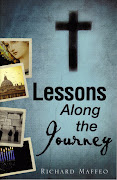
There is no other name but Jesus whereby we must be saved. Welcome to my blog: In Him Only. I hope you will be encouraged by what you read.

Sunday, September 14, 2014

Nothing to Fear from God


While you did all this, I remained silent, and you thought I didn't care. But now I will rebuke you, listing all my charges against you. (Psalm 50:21, New Living Translation)

I posted a video to one of my online social network sites which suggested 9-11-01 was part of God’s judgment on America because of its many sins. One reader took great umbrage with that idea. He believes 9-11 was simply the sinful act of “misguided” men, and is unwilling to believe God would permit all those innocent people to die because of the nation’s sins. Of course, that reader is not alone in his belief. I have witnessed the same idea promoted for years from pulpits and in religious magazines and newspapers.

I suppose the idea that God does not personally mete out judgment against sin can be traced to the God is Dead movement that gained ascendency in America during the 1960s. “I’m OK, You’re Ok” became a popular mantra, followed by, “There are no absolutes: No absolute truth, no absolute right or wrong moral choices -- everything depends on the situation.” As that philosophy slowly permeated the culture through the universities and the media, it ultimately found its way into the Church where, in the last few decades, parishioners hear from the pulpit more often than not, “God is Love” without the equally true biblical injunction, “Be holy, for God is holy.”

The morning after my online exchange I sat in my recliner and began my usual time with the Lord. I opened the Bible to chapter 8 of 1 Kings to read Solomon’s prayer of dedication of the Temple. The prayer extends from verses 12 through 53, but my attention focused on only a small section of the prayer. Beginning with verse 33, Solomon asked this of God:

“When Your people Israel are defeated before an enemy, because they have sinned against You, if they turn to You again and confess Your name and pray and make supplication to You in this house, then hear in heaven, and forgive the sin of Your people Israel, and bring them back to the land which You gave to their fathers.

“When the heavens are shut up and there is no rain, because they have sinned against You, and they pray toward this place and confess Your name and turn from their sin when You afflict them, then hear in heaven and forgive the sin of Your servants . . . .”

“If there is famine in the land, if there is pestilence, if there is blight or mildew, locust or grasshopper, if their enemy besieges them in the land of their cities, whatever plague, whatever sickness there is, whatever prayer or supplication is made by any man or by all Your people Israel . . . then hear in heaven. . . that they may fear You.”

Solomon is not the only one in Biblical history to associate disasters – whether of nature or of man – with God’s judgment of sin. One cannot read Moses, or the prophets, or the epistles, or Revelation, and come away with a philosophy popular in much of today’s Church that God does not use nature or Man to judge sin – whether personal or national sin.

America has mercilessly killed more than 55 million babies in abortion clinics since 1973. Grasp the magnitude of that bloodshed. Fifty-five million. And in that time America has also elevated sexual perversions of all sorts to the place of protected legal status. We vote into political power men and women well-known for their deceit, thefts, murders, immoralities, treasons . . .  and we love it so.

If we choose to believe earthquakes, floods, droughts, and other ‘acts of God’ are simply random acts of nature, and not God’s ‘wake up’ call to repentance, then there is no need for a sinful nation to repent, to change, and beg God’s forgiveness. If we choose to believe the tragedies caused by planes crashing into buildings on 9-11 were simply the work of evil men acting on their own free will, then we will not be open to the possibility that God is removing His protective shield over America because of our national sins. Therefore, there is no need to gather on our knees in churches across the land and repent, and change, because we have nothing to fear from God. After all, God is Love.

Do we really think God does not see?  Or care? Or judge sin? In another of his writings, Solomon noted, Because the sentence against an evil deed is not executed quickly, therefore the hearts of the sons of men among them are given fully to do evil.  (Ecclesiastes 8:11)

There is, of course, a better way to live, and that is in accordance with the historic teaching of the Church, and the historic teaching of Scripture, which can be summed up in this axiom: When the plain sense of scripture makes common sense, seek no other sense; therefore, take every word at its primary, ordinary, usual, literal meaning, unless the facts of the immediate context, studied in the light of related passages and fundamental truths indicate clearly otherwise.

From one end of the Book to the other, Scripture tells us not only is God Love, but that He is also a Holy God. We say that sometimes too quickly and too easily. But let’s now say it slowly: God is Holy. Righteous. Sacred. Pure. Undefiled. And He demands of us the same. When we choose to live otherwise, then we have good reason to fear, as the historic Church and all the Biblical writers have warned.

God is not one to be mocked, wrote Saint Paul. Whatever we sow, we will reap (Galatians 6:7). The writer to the Hebrews added: “Our God is a consuming fire”, (Hebrews 12:29) and, “It is a fearful thing to fall into the hands of the living God” (Hebrews 10:31).

God is not dead. And He is not asleep.

Friday, September 12, 2014

My Next YouTube study in 1 Peter is online (Lesson 8)


In the Catechism of the Catholic Church we find this about the Bible (paragraph 104): In Sacred Scripture  . . .  the Father who is in heaven comes lovingly to meet his children, and talks with them." Log onto my YouTube study in 1 Peter, here: http://youtu.be/eooECbLcZKo

Wednesday, September 10, 2014

Numbering Our Days


I published this in my second book, Lessons Along the Journey. I hope you find it meaningful.
 --------------

Who understands the power of Your anger and Your fury, according to the fear that is due You? So teach us to number our days, that we may present to You a heart of wisdom. – The Psalmist (Psalm 90:11-12, NASB)

             I love dessert. That’s why I have to exercise regularly to control my weight. I jog three miles, three times a week. On non-run days, I lift weights. Sundays – well, Sundays I look forward to my nap on the couch after Nancy and I return from Mass.

           So there I was at work one Monday, about 15 minutes after showering away the effects of an unusually grueling lunchtime run in 90-degree heat. I ignored my exhaustion and decided to take the stairs from the ground floor to my office on the sixth. By the time I reached to the fourth floor, my legs felt like mush. I almost heard them whimper at me to take the elevator.

           I ignored their appeal and pushed on.

           A moment later, down the stairs trotted this bouncy young lady – all of twenty, I supposed. Her broad smile faded into an uncertain grin when she saw me. By now, I was holding onto either side of the rails and pulling myself up each step.

           "Are you okay?" She stopped a few steps above me. I heard in her tone the same concern I use when I meet elderly people who look as if they really need to sit down.

           "I'm . . . fine," I managed to gasp between breaths. "Thanks."

           "You sure?"

           I wanted to tell her I'm in great shape. I jog three miles and all of that – but thought better of it. When I nodded, she gave me one more cautious glance, and continued on her way. I toughed out the next two flights – grateful to finally reach the sixth floor.

           I thought about that incident later as I drove home. It seems like only yesterday I was the one bouncing down the stairs, full of twenty-year-old energy. So, when did yesterday wilt into today? When did energy morph into exhaustion? Before we realize it, we are the elderly person we once tried to help, and we understand why the Psalmist asked God to teach us to number our days, and why St. Paul wrote: “Watch carefully then how you live, not as foolish persons but as wise, making the most of the opportunity, because the days are evil” (Ephesians 5:15-16).

           I’ve learned this lesson before, and I guess I needed to learn it again: When our yesterdays and todays terminate at the graveside, we won’t care how much money we've earned, how many awards we've won or how many miles we've jogged. What we will care about – at least, what I will care about – is, have I done all I could do for the King of Glory with the days that I had?

Tuesday, September 2, 2014

Not Better, But Best

With [Moses] I speak mouth to mouth, even openly, and not in dark sayings, and he beholds the form of the Lord.  (Numbers 12:8)

I have in the past envied Moses. I can’t count the times I have thought how much better my life would be if God met me like He met Moses, if He would sit on my living room couch so I could ask Him for direction. Or why I – or some in the family – struggle with whatever it is we struggle with.

I have also wondered if it wouldn’t be better for the world if God showed Himself as He did in the past.  Maybe ‘rend the heavens and come down, that the mountains might quake at His presence”, as Isaiah prayed (64:1). Or open the ground as He did with Korah and company (Numbers 16). If He did those kinds of things today, people would know who is really in charge.

Yes, I sometimes think it would be better for all of us if God did things differently.

And then I have a momentary sense of clarity – which usually lasts only for a moment. No, it would not be better, because if it would be better, our heavenly Father would do it. If it would be better God would rend the heavens, or open the earth, or sit on my living room couch and tell me all I want to know. 

But our loving God does not do what is ‘better’ because He chooses to do for us what is ‘best.’  For me. For my family. For our world.

God reminds us through Isaiah, For My thoughts are not your thoughts, nor are your ways My ways,” declares the Lord. “For as the heavens are higher than the earth, so are My ways higher than your ways and My thoughts than your thoughts.” (55:8-9)

I suppose, like all things related to God, it’s a matter of faith. When God is silent, it is not because He is unaware of what is happening in my life, or of my confusion, my pain, or my loss. No, He is silent because – even as He sits in the shadows – He is busy working out what is best for me, and not simply what is better. When evil sears across the globe and He is silent, it is not because He is impotent, but because somehow, in some supernatural way, He is working to cause all of it – even genocide – to produce the best for all of us.

I do not understand God. Sometimes He is a complete enigma to me. At other times He is an absolute mystery. But that does not stop me from pressing on toward the kind of faith that promises, despite the darkness, despite His seeming indifference, God wants not what is better for me, or for humanity.

He wants what is best. 

Saturday, August 30, 2014

Do We Still Not Get It?


I’ve read reports about microchip implants before, but this one is different. It makes the idea of an RFID chip under your skin seem to be the best idea since chocolate. Why would anyone refuse the chip?

But what concerns me most about the article is the number of Catholic and other Christians who still don’t get it. I think I know why. They’ve been taught for decades the events recorded in Revelation were all fulfilled in the first century. As a consequence, they remain unaware of the real and present danger facing us, danger of which Jesus warned us about in that prophetic book of Revelation .

It doesn’t take a lot of intuition to associate the linked article about the RFID chip with this prediction in Revelation 13:16-17: "And he causes all, the small and the great, and the rich and the poor, and the free men and the slaves, to be given a mark on their right hand or on their forehead, and he provides that no one will be able to buy or to sell, except the one who has the mark, either the name of the beast or the number of his name."

Nor does it take a lot of imagination – especially in these days – to correlate the rapidly increasing persecution of Christians and Jews around the world with the prophecies in Revelation concerning world-wide persecutions awaiting God’s people. (Indeed, Jesus also warned of persecutions, along with international, geographic, and cosmic upheavals in the gospels. Neither were some of the OT prophets like Ezekiel and Daniel silent on the subject. But I digress).

For those who teach, and for those who have been taught, that the Revelation of Jesus Christ to John refers exclusively to the first century, I suggest they take a more reasoned look at the world around us.

There is an important text in Acts 17:10-11 which is apropos to the point.  St. Paul visited Thessalonica and Berea during one of his missionary journeys.  Here is what the text tells us about those two cities:

"The brethren immediately sent Paul and Silas away by night to Berea, and when they arrived, they went into the synagogue of the Jews. Now these were more noble-minded than those in Thessalonica, for they received the word with great eagerness, examining the Scriptures daily to see whether these things were so."
Notice how the Holy Spirit refers to the Christians in those cities. The Bereans were “more noble-minded” than those in Thessalonica because the Bereans “examined the scriptures daily,” to see whether the things taught by St. Paul were true.

Should we in the 21st century do less than the Bereans? And if we decide Revelation does, in fact, speak to the impending dangers Christians today face, how then should we proceed?

That’s an easy question to answer. As Jesus said: "Be on the alert—for you do not know when the master of the house is coming, whether in the evening, at midnight, or when the rooster crows, or in the morning— in case he should come suddenly and find you asleep. What I say to you I say to all, ‘Be on the alert!’" (Mark 13:35-37)

An important part of being alert includes frequent confession, and frequent confirmation and reconfirmation, along with frequent dedication and rededication of our life to Jesus – for no one knows the day or the hour.

Thursday, August 28, 2014

Here, Daddy. I Love You


I published this in my second book, Lessons Along the Journey. I hope you find it useful.  Although many years have passed since I first wrote this essay, I still have Nathan's marble hanging prominently on a wall in my office.
--------------

The world asks, “How much does he give?” Christ asks, “Why does he give?”– John Raleigh Mott


Visitors never seem to notice the small black marble on the shelf in our family room. They probably think it’s nothing more than a common piece of round glass, the kind you find in bags of fifty in toy stores. To me, though, it’s a treasure.

My son, Nathan, gave it to me when he was five. Until then he had kept it safe in a corner of his socks drawer. Whenever he left the house, he carried it in his front jeans pocket. One morning while I watched television, he marched into the living room clutching his treasure in his fist.

“Here, daddy.” He opened his hand.

“What’s this?”

“I love you,” he answered.

I switched off the television and stared at the marble. It wasn’t my birthday or any other special day, yet there he was, offering me his special treasure for no other reason than he loved me.

We’ve lived in eight different homes since that day, and in each one, I displayed the marble in a prominent place – not just because it is Nathan’s love-gift to me, but because the simple piece of glass reminds me of a great spiritual lesson: Sometimes I struggle with feelings of worthlessness, and I can’t help but wonder how often other Christians think of themselves in the same way. How many think they are just one of a million insignificant people scurrying to work, to school, to the supermarket? Outside of a small group of family, friends, and acquaintances, no one will ever know – or care – that we lived and died. What can anyone as unimportant as we, offer our Father in heaven?

There aren't any Biblical texts in which God says, "I will mount your love-offering on my shelf." But I am convinced our heavenly Father is greatly moved by our willingness to give Him ourselves, as I was when Nathan offered me his treasure. I believe God proudly displays to the angels our love-gifts of talents, time, finances, pleasures – the things some of us jealously hide in the corners of our drawers or carry close in our pockets.

And I do not doubt He is well pleased when we open our hands and say, "Here, daddy. I love you."

God is pleased with what we offer Him in love.


Monday, August 25, 2014

Sunday, August 17, 2014

Don't Mess WithThe Mounds


I published this in my second book, Lessons Along the Journey
------


Has the Lord as much delight in burnt offerings and sacrifices as in obeying the voice of the Lord? Behold, to obey is better than sacrifice, and to heed than the fat of rams. For rebellion is as the sin of divination, and insubordination is as iniquity and idolatry. – The Prophet Samuel (1 Samuel 15:22-23)


            I know why they’re called fire ants. I’ve been stung more than a few times, and I can tell you it feels like . . . well, like fire. The first time it happened, I thought someone had jabbed a match into my foot.

            Fire ants are not native to Texas where I first encountered them. They’re from South America. No one knows how they got to the Lone Star State – or how to get rid of them, but their nests are easy enough to spot. Although the critters build underground, their telltale mounds at the surface can be as large as four feet around. That’s a lot of ants waiting for some careless person to get too close.

One day, curiosity got the better of my judgment. I poked a stick into a mound, stirred it up, and watched a bazillion frenzied ants scatter in all directions, back and forth into their nest, over and around in circles.  

Mesmerized, I studied them.

That was a big mistake. Before I realized what some of them were doing, they had raced up the stick. In moments, my fingers and palm felt like they were on fire. The welts lasted for days.

            That taught me to stay clear of fire ant mounds, but that experience also taught me a valuable spiritual lesson.

            The devil is not native to our planet. Some Bible scholars interpret Isaiah 14 and Ezekiel 28 as describing Satan’s original habitation in heaven. When the devil rebelled, God cast him and other mutinous angels to earth (see also Luke 10:18, Revelation 12:9).

            Although Satan works “underground,” in the invisible realm of the spirit, his telltale signs are easy enough to spot. The dirt he brings to the surface – despair, disease, hopelessness, and death – is everywhere. And he waits patiently for some careless person to wander near, to stir the soil, test the limits, so he can move in for the kill.

            I assure you, his assault is not pleasant

            As a young Christian, I tested those limits and played the dangerous game of seeing how close I could get to temptation without being hurt. I stirred up old rebellions from the days before my conversion to Christ. A drug experience here, a small lie there, a flirtation with sexual immorality . . . .

            I thought I could get close to the fire and not be burned. Oh! How wrong I was. No one can stir Satan’s mounds without getting stung, and unlike fire ant welts, the devil’s wounds can last a lifetime. That is why I give wide berth to conversations and entertainment that might seduce me into believing it’s safe enough to play with fire. That is why I avoid associations and situations that can lull me into rationalizing why it’s okay to play near his mound. My spiritual wounds and scars are ever present reminders to me that the devil is much more dangerous than the fire ant.

            And he is not a creature to trifle with.


The devil’s snare does not catch you unless you are first caught by the devil’s bait.

– St. Ambrose


Saturday, August 16, 2014

Bible Study in 1 Peter on Youtube

It is easy to read Scripture texts that speak of serious, blood-curdling trials. The words fall across the tongue as if we are reading about the local weather report. 


But for some of us, even today, these words strike deep into our spirit, our souls, our lives. The testing of our faith is not an easy journey. It brims over with great sadness, grief, mourning, anger, even bitterness. This is one of the things I talk about in this week’s study through chapter one of Peter’s first epistle. 


You can view the 23 minute study here: http://youtu.be/oKSqIyds020

Monday, August 11, 2014

Chain-Link Fences

This essay originally appeared in my book, Lessons Along the Journey.
------------- 

For freedom Christ set us free; so stand firm and do not submit again to the yoke of slavery. (Galatians 5:1)
 
            I wondered why the gazelles remained penned behind the chain-link fence. With a good running start, even I could have leapt over it – and I’m no athlete. Then our tour guide explained the reason. The fence leans into the animals’ grazing area, creating a perception that the fence is taller than it really is. Although they could easily escape, they never try.

            We continued our walking tour of the zoo, but my mind stayed with the gazelles. What irony that those fleet-footed creatures graze only a few yards from freedom, confined by a barrier more psychological than physical.

            But gazelles are not the only creatures of God trapped by psychological barriers. Like He did the gazelle, God created me to be free – to love, hope, plan, and dream. Yet I’ve lost count how many times I’ve permitted myself to be penned in by barriers rooted in my mind.

            You’d think I’d know better. I’ve read the promises of Scripture for many years – texts like, “With You I can rush an armed band, with my God to help I can leap a wall” (Psalm 18:30), and “I can do all things through (Christ) who strengthens me” (Philippians 4:13). But the problem is, God’s assurances usually remain in my head when they should overflow my heart.

            Sometimes I think I am a lot like Naaman, the esteemed and well-respected commander of Aram’s army. You can read about him in 2 Kings, chapter 5.

            But respect and esteem could not free him from the prison of his leprosy and his story makes for a good object lesson in faith – and challenges even the 21st century reader. When Naaman learned the Jewish prophet Elisha could pray over him and heal his disease, he traveled to Israel expecting a miraculous cure. But instead of praying over the Aramean, Elisha told him to wash himself seven times in the Jordan, “and your flesh will heal, and you will be clean” (verse 10).

            Naaman grew furious. “I thought that he would surely come out and stand there to invoke the Lord his God, and would move his hand over the spot, and would cure the leprosy.” The commander of Aram’s military forces was not only locked into his disease, but he was also a prisoner of his expectations about how God should do things.

            The story ends well for Naaman, but only after he trusted the prophet – and got wet.

            But what of our story?

What kind of spiritual fences imprison us? Indecision? Scripture answers, “If any of you lacks wisdom, he should ask God, who gives generously to all” (James 1:5). Loneliness? God promises, “Never will I leave you; never will I forsake you” (Hebrews 13:5).  Fear or doubt? The Lord Jesus said, “Do not let your hearts be troubled. You have faith in God; have faith also in me” (John 14:1).

            Every now and again I lift my eyes toward the hills, yearning to graze in the lush fields beyond the fence. And sometimes, as I scan the horizon, I catch a glimpse of what Elisha knew, and Naaman had to learn: no fence can withstand the power of our Heavenly Father. He opens and no one can shut. He shuts, and no one can open. He holds the keys of death and of hell (see Revelation 1:18). Why do I doubt He can open less formidable prisons?


Tuesday, August 5, 2014

Cell Phones and God

This appears in my second book, Lessons Along the Journey.


The choice of the time and duration of the prayer arises from a determined will . . . One does not undertake contemplative prayer only when one has the time: one makes time for the Lord. – Catechism of the Catholic Church (2710)

 
            I thought my wife was joking when she suggested I leave the cell phone in the car. Why would I want to leave my lifeline behind for two hours? What if someone wants to get hold of me?

            But I could tell by her look she wasn't kidding. So, I sighed and slid the phone into its car cradle. I didn't know it then, but God had been trying to get hold of me for quite some time, and all He'd been getting was a busy signal.

            The St. Edmund's Sunset Cruise and Evening of Reflection along the shores of Mystic, Connecticut, was not like any dinner cruise we’d experienced in the past. For example, when Nancy and I lived in San Diego, we took periodic tours around the harbor while we savored sumptuous three-course meals, listened to soft dinner music, and enjoyed colorful city lights along the shore. In contrast, the St. Edmund's Cruise provided a choice of ham, turkey or tuna sandwiches, a bag of chips and chocolate brownie. Acappella hymns replaced smooth-jazz dinner music. An orange-red sun melting behind clouds on the horizon took the place of city lights around the San Diego harbor.

            Thirty minutes into our cruise, the captain cut the engines and hoisted the sails. That's when Father Tom Hoar, Director of St Edmund's Retreat, stood at the bow of the schooner, read Scripture, and reminded us of our part in God's Creation. “Just as we can see God's beauty in nature before us,” he said, “we need to learn to see God's image and beauty in each other.”

            As he continued his instruction, I was glad I'd left the phone in the car. It's hard to hear from God when I'm waiting to hear from someone else.

            I met Father Tom a few days later over coffee. He said to me, "People sometimes arrive onboard with broken spirits. The cruise offers a time to discover, or to rediscover, the mercy and power of God in their lives.” The Evening of Reflection Cruise “offers people an opportunity to quiet down for a few hours. And besides," he added, "it's just a pleasant and emotionally aesthetic experience. So, if you can bring prayer into that, then you hope people will find other ordinary ways to bring God into their lives."

            He sipped his decaf and added, "You see all this stuff on TV, or go to bookstores and you see all this pop spirituality, and a lot of it is self-help claptrap. And really, the message is very simple: God created us. God loves us. He loves us so much that He gave Christ to redeem us. And God is available to each of us."

            I mused over that thought for a while: God loves us, and He is available to each of us. And while musing, I yearned for a quiet place of my own, a place where I could reflect on God’s goodness and meditate on His love.

            I found that place at home a little later. It was by the window in a small corner of our guest room. I converted the space into a type of prayer closet, sectioned off from the rest of the area with a screen. I hung a crucifix on the wall opposite my rocker to remind my of my Savior’s sacrifice. It is there that I quiet myself with my Lord an hour earlier than I would otherwise awaken. It’s where I meet Him again in the evening before I go to sleep.

            I’m glad I listened to Nancy and left the cell phone in the car that summer evening. Doing so taught me the value of leaving distractions behind so I might enter quietly, meditatively, into God’s presence.

            It is only there, in His presence, can anyone find rest.

 
God cannot be found in noise and restlessness. God is the friend of silence.  – Mother Teresa